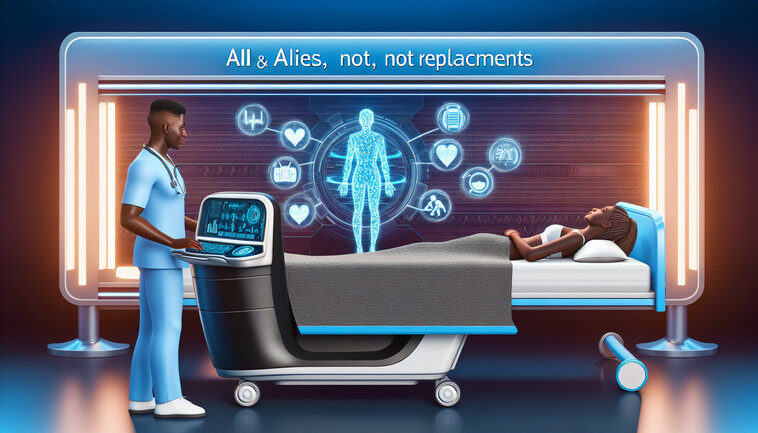
AI and Healthcare: Allies, Not Replacements, for Nurses
In the rapidly evolving landscape of technology, Artificial Intelligence (AI) stands at the forefront, poised as a transformative force across numerous sectors. Healthcare, an industry perpetually teetering between innovation and empathy, finds itself grappling with the implications of AI-enhanced capabilities. While there’s no denying the potential of AI to enhance medical processes, experts in the field firmly underline that AI will serve as a tool for nurses, enhancing their role rather than replacing it.
Nurses, the backbone of the healthcare system, provide not just medical care but also human connection, an aspect irreplaceable by machines. This critical component of healthcare hinges on emotional intelligence and human touch—qualities inherently lacking in AI. The discussion surrounding AI’s integration into nursing duties reflects a broader concern in society about the balance between technology and humanity.
AI’s role in healthcare is akin to a powerful assistant, capable of streamlining operations that require precision and large-scale data processing. Imagine AI systems that can efficiently monitor patient vitals, allowing nurses to focus on direct patient care and decision-making. This collaborative dynamic empowers nurses, enabling them to allocate their time and expertise more effectively and prioritize tasks that demand a human presence.
Moreover, AI can offer tremendous potential in diagnostics, helping reduce human error by cross-referencing symptoms with vast databases of medical records. This doesn’t undermine the expertise of healthcare professionals; rather, it complements their knowledge, acting as an assistive tool that can enhance diagnostic confidence and accuracy. By handling repetitive tasks, AI grants nurses the bandwidth to engage in more critical thinking and patient interaction.
Despite the exciting prospects, the integration of AI in healthcare demands cautious consideration. Ethical standards must be steadfast, and transparency regarding how AI systems reach specific conclusions should be a priority. Nurses and healthcare providers must be active participants in these technological advancements to ensure systems align with the complex realities of patient care.
The future of AI in nursing also hinges on education and training. Continuous professional development programs will be crucial for nurses to seamlessly incorporate AI tools into their daily routines. A workforce that is well-versed in the nuances of technology ensures that AI remains a servant of human wisdom, not its substitute.
In conclusion, AI’s anticipated role in healthcare is one of collaboration, not replacement. By remaining steadfast in our commitment to patient-centered care while leveraging AI’s capabilities, the healthcare industry can usher in a new era of efficiency and empathy. As we continue to explore the intersection of technology and health, the emphasis must remain on augmenting, rather than diminishing, the vital roles only human professionals can fulfill.

Related Posts