Power Strip Probabilities: Unpacking the Curious Case of Tesla Charging Methods
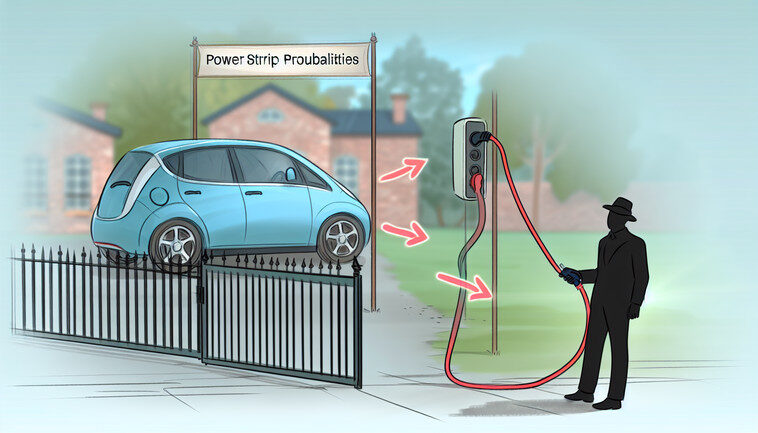
Earlier this week, a video surfaced online capturing something you don’t see every day: a Tesla owner charging their vehicle using a power strip, draped somewhat uncertainly over a gate. The scene, unusual in its creativity, sparked a mixture of amusement and skepticism about the feasibility and safety of such a method.
Electric vehicle enthusiasts and skeptics alike were quick to question, “Does it really work?” The image of a cutting-edge Tesla, designed for efficiency and high performance, being charged in such a rudimentary way, certainly juxtaposes the advanced and the makeshift. Yet, despite its unconventional appearance, the sight left many wondering about the flexibility and potential risks of electric vehicle charging alternatives.
Power strips are commonplace in households and typically serve low-power electronics. They’re not designed to handle large power loads like that of an electric vehicle, which clearly raises concerns about safety. Overloading a power strip can lead to overheating, posing a fire hazard. Without proper technical adaptations, this scenario makes for a potentially risky venture.
The practice of charging via a power strip also highlights a greater dilemma that continues to challenge the broader acceptance of electric vehicles: the availability and accessibility of charging stations. While infrastructure is growing, gaps still exist, particularly in less urban areas, pushing some to adopt potentially unsafe methods when public or dedicated charging facilities aren’t readily available.
This incident is a reminder of the critical need for continued expansion of robust EV infrastructure. Not only would this reduce the likelihood of dangerous improvised charging setups, but it would also encourage more individuals to transition to cleaner energy vehicles with confidence. The novelty of electric cars must be matched by pragmatic solutions to everyday practicalities, such as convenient charging.
Moreover, this quirky charging episode offers a glimpse into the innovative spirit of many electric vehicle owners. While safety should never be compromised, it is exciting to see how owners are pushing the boundaries of conventional vehicle maintenance and operation. The drive to innovate often stems from such unique experiments — however, they should be tested under controlled and safe conditions.
In conclusion, the sight of a Tesla being charged via a power strip over a gate is a perfect metaphor for the ongoing transition to electric vehicles: full of potential but not without its challenges. As infrastructure catches up with innovation, and drivers continue to adapt and innovate, it’s essential to remember that safety should always come first. After all, the journey to a sustainable future must tread carefully on the path of progress.

Related Posts