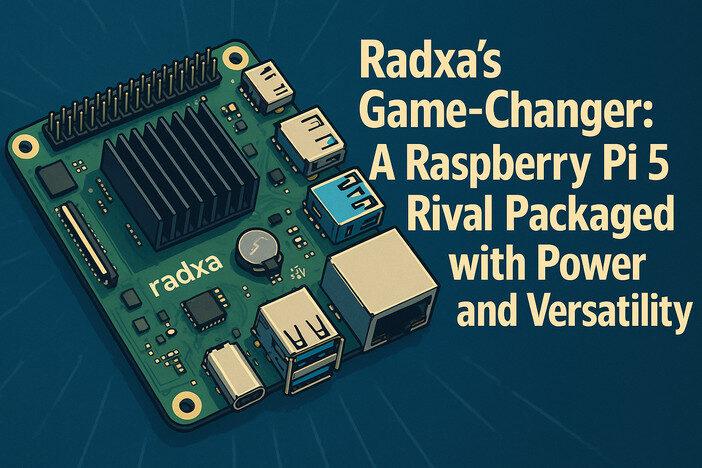
Radxa’s Game-Changer: A Raspberry Pi 5 Rival Packaged with Power and Versatility
In the ever-evolving landscape of single-board computers, Radxa has just unveiled its latest powerhouse, poised to make significant waves in the market. Positioned as a formidable rival to the much-celebrated Raspberry Pi 5, Radxa’s new offering doesn’t just compete; it raises the bar with its enhanced capabilities. Geared towards tech enthusiasts and developers alike, this new single-board computer offers a tantalizing glimpse into the future of compact computing.
At the heart of Radxa’s innovation is its flexibility. While the Raspberry Pi has long been the go-to for various DIY projects, Radxa’s board is outfitted with hardware that promises not only more power but also more functionality. The inclusion of up to 32GB RAM places it in a league of its own in the single-board sphere, catering to those requiring heavy multi-tasking and memory-intensive applications.
One of the standout features of this new contender is its support for 4K at 120Hz video playback. This capability is particularly appealing for media center setups, where high-definition video and smooth playback are non-negotiables. By leveraging a Snapdragon processor, Radxa ensures that video enthusiasts can enjoy seamless, high-quality experiences that were once exclusive to higher-end systems.
Moreover, the board’s commitment to connectivity cannot be overstated. With fast networking options, including PCIe Gen3 support, Radxa’s device is well-equipped to serve in environments where data speed and bandwidth are crucial. Whether it’s for setting up a networked server or merely ensuring your DIY IoT projects communicate efficiently, this board promises to deliver speed and reliability.
From an installation and usability perspective, Radxa strives to maintain the accessibility that Raspberry Pi users have come to expect. Its design, rich with features, somehow manages to keep the simplicity and approachability that make single-board computers so appealing. Developers and hobbyists can dive right in without being bogged down by overly complicated initializer setups.
In the context of single-board computers, Radxa’s entry is more than just incremental improvement; it’s a bold statement. It challenges the notion of what such devices can achieve and poses intriguing possibilities for the open-source community that relies so heavily on flexible, powerful hardware.
In conclusion, Radxa’s new single-board computer emerges as not just a competitor, but as a beacon for future advancements in the field. While it may initially draw attention for its impressive specs when compared to the Raspberry Pi 5, its real value lies in how it expands the potential of what users can create and accomplish. As we stand on the cusp of new innovations, Radxa inspires users to dream bigger with their projects, fortified by technology that doesn’t just meet current demands but anticipates future needs.

Related Posts